
Search Ithaca Property Records by City Address
Tompkins County holds the assessment rolls, deed records, tax maps, and most parcel data. The City of Ithaca, meanwhile, keeps its own permit and zoning files. The split matters. Begin with the address in Beacon. Confirm the municipality reads City of Ithaca, then copy the Printkey. Run the parcel and the printed owner of record through the County Clerk deed index. Mapping Tompkins adds parcel context. The responsible collector answers tax status. The Building Division holds city project records.
- Confirm City of Ithaca, not Town of Ithaca or a nearby village.
- Copy parcel and dated owner fields from Assessment.
- Read the newest deed through Land Services.
- Review tax-map and GIS context.
- Check city permits by address and category.
Where Ithaca Property Records Are Kept
Custody splits between the county and the city. The County Clerk records deeds, mortgages, liens, plats, judgments, and satisfactions. County Assessment keeps the roll, values, exemptions, sketches, and tax maps. Finance or the applicable collector handles balances. City files cover building and code administration. Ask the city portal for title. Ask the assessor about payments. Either one sends a property search to the wrong desk.
Tompkins County custodians
Land Services: 320 N Tioga Street
Assessment, Finance, and Mapping Tompkins
Ithaca Building Division
108 E Green Street
Building, electrical, demolition, sign, tent, and compliance files
Ithaca Neighborhoods and Districts in the Records
Neighborhood names organize city history. But they cannot replace a parcel number or a legal description. City sources use labels like Northside, Southside, Fall Creek, University Hill, East Shore, West End, and West Hill, with a warning that boundaries shift. That caveat matters. Historic district records offer firmer designation context for certain areas.
| Neighborhood or district | Era or designation | Record context |
|---|---|---|
| Cornell Heights | Local 1990; National Register 1989 | Historic district maps and nominations |
| Henry St John | Designated 2013; resources 1830 to 1932 | West Green, West Clinton, North Titus, Titus Flats context |
| DeWitt Park | Early nineteenth-century civic setting | Nomination and historic parcel context |
| Fall Creek and Northside | City neighborhood labels | Useful address context, not title boundaries |
Ithaca Permit Search Fields
Current permitting runs through ViewPoint/OpenGov. A submission can list the property address, permit category, owner or applicant, project description, estimated cost, insurance, contractor and license details, plans, and payment. Those fields tie a project to a parcel. Read them carefully, though. A name on a permit is not proof of title, and a filing is not proof the city issued a permit.
| Permit field | Research use | Caution |
|---|---|---|
| Property address | Match city parcel | Confirm municipality and Printkey |
| Category | Building, electrical, demolition, tent, sign, compliance | Categories can change |
| Owner or applicant | Identify filing party | Not title evidence |
| Project and cost | Describe proposed work | Not proof of completion |
| Plans and licenses | Review submitted support | Access may be limited |
Current and Historic Ithaca Permit Files
The city describes a typical review of five to ten business days, with other departments joining when needed, and references city zoning plus the 2020 New York State codes. The published fee calculation is $35 up to $5,000, then $7 per $1,000 or fraction above. Confirm fees before filing. Stamped professional plans are required for specified structural or public-safety work over $20,000, or residential work over 1,500 square feet. No historic address-indexed permit database is published. Older files come from the Building Division or FOIL. The official permit information page shows current categories and instructions. It is the starting point for any permit search.
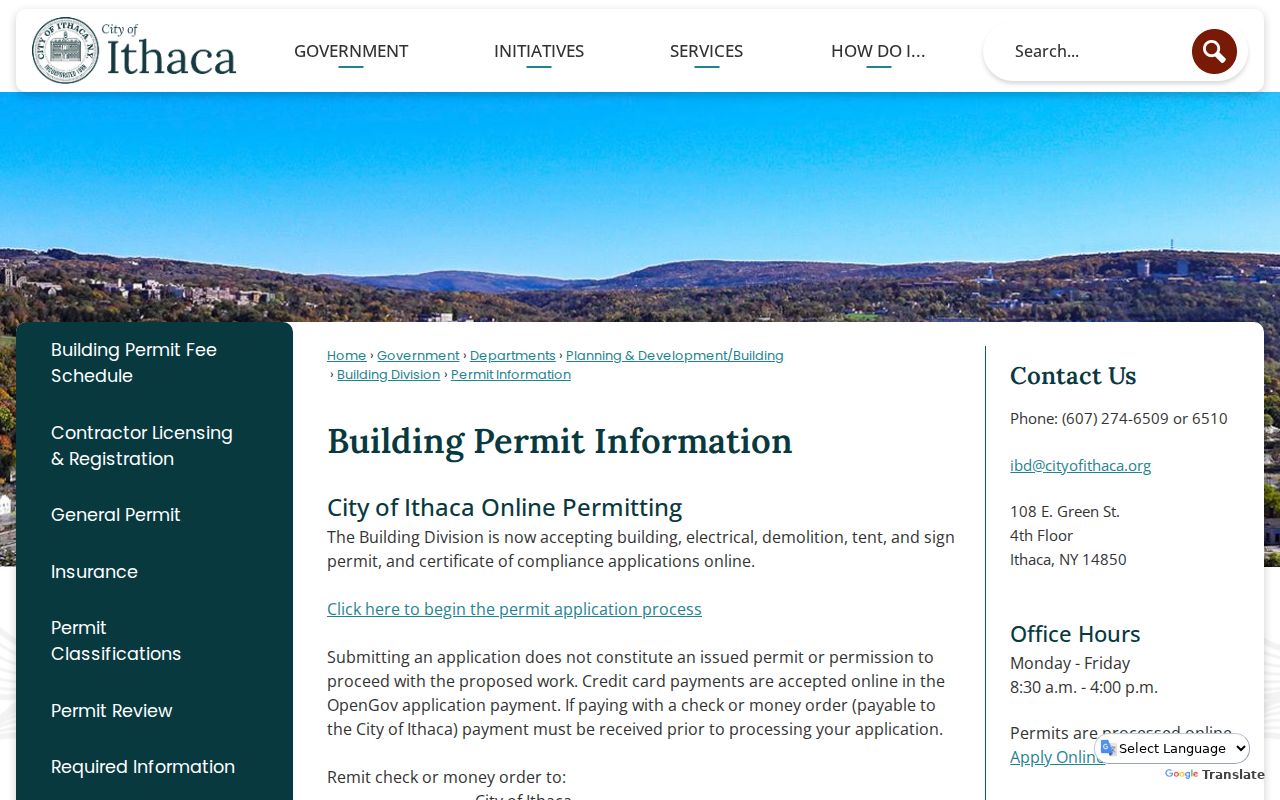
The page covers current routes; FOIL covers the rest.
Ithaca ZIP Codes and Municipal Boundaries
ZIP 14850 is strongly tied to Ithaca, and 14853 routes Cornell campus mail, but postal geography never defines the city line. An Ithaca mailing address may sit in another town. Cayuga Heights adds more confusion. Verify delivery through USPS tools. Verify the municipality through Beacon or GIS. The distinction affects permits, collectors, and local court or FOIL routing. Keep street address, postal city, ZIP, municipality, and parcel number as five separate fields in an Ithaca property records worksheet.
City Values and Tompkins County Assessment
Tompkins County is a countywide assessing unit, so Ithaca parcels appear in county assessment materials. Roll fields can include CURRENT OWNERS NAME, CURRENT OWNERS ADDRESS, PROPERTY LOCATION, land, total, taxable, full market, exemption, and property class. District context also appears. A roll is dated. It can lag a deed. The county's 100 percent assessment context does not convert a value into a sale appraisal. Assessment posts final rolls for 2023 through 2026, with separate tax-roll links. Current balances belong to the collector or Finance. Later credits and delinquent charges can leave a produced city roll incomplete for today's balance.
Deeds and Historic Ithaca Addresses
The Clerk's land-record collection runs from 1817 forward. Public Records Advanced searches grantor, grantee, parcel, city, dates, type, document number, and book/page. The earliest online year is not shown, though. For pre-1968 staff work, budget for the $5-per-name, per-two-year-period price. Historic street changes and neighborhood labels complicate older searches. Legal descriptions and prior deed references become vital. Tompkins County Public Library lists directories from 1864 through 1985, with gaps. The History Center holds maps, ledgers, family files, newspapers from 1819, and HistoryForge. These collections add people and building context but never replace the recorded deed chain.
Ithaca Historic District Property Research
Three Ithaca historic districts reward careful research. Cornell Heights, Henry St John, and DeWitt Park records can document architectural and planning history. Henry St John material covers resources from 1830 to 1932 and architecture from Federal through Colonial Revival. DeWitt Park sources tie Simeon DeWitt's planning and civic buildings to historic parcels. Pair the nomination's map, inventory, and deed. A district boundary is not a parcel boundary. Designation does not state ownership. Confirm alterations in city files and title in County Clerk deed records.
Ithaca Court and Estate Leads
Ithaca City Court sits at 118 E Clinton Street. It hears civil claims up to $15,000 along with city criminal matters. It is not the deed office. Copies cost 65 cents per page, with a $1.30 minimum and a stated $40 maximum. A disposition certificate runs $5. Foreclosure, partition, quiet title, and easement disputes call for a different forum. The Supreme or County Court is the proper route.
Surrogate's Court, at 320 N Tioga, has handled estate filings since 1818. A probate file can show who held fiduciary authority over an estate. A later Clerk instrument records the actual land transfer. Keep court evidence and deed evidence distinct.
What Ithaca Property Records Cannot Prove
Ithaca property records have limits worth knowing. They do not prove occupancy, guarantee clear title, establish a surveyed boundary, or supply a current appraisal. A permit application proves neither issuance nor completion. A tax map is reference geometry only. A directory entry ties a name to an address solely within that source's date and scope.
Use records with care. Confirm important facts with the county or city custodian and never use owner or address data to harass or target anyone.