
Find Who Owns a Tompkins County Property
Three linked property records answer the question reliably. Beacon finds the assessed parcel. It prints CURRENT OWNERS NAME on the dated tax roll. The County Clerk index lists recorded deeds by grantor, grantee, parcel, city, and date. The newest deed image then supplies the transfer itself plus the legal description. Mapping Tompkins ties the three searches to one parcel.
Address → Beacon parcel → roll owner → newest deed → grantee.
This order keeps an assessment snapshot distinct from recorded title evidence. Neither source proves occupancy. Neither one certifies title.
Start with the Tompkins County Parcel
Begin in Beacon by searching the property address, but confirm the municipality first. An Ithaca mailing line is ambiguous. It could mean the City of Ithaca, the Town of Ithaca, or another nearby jurisdiction. Copy the Printkey, PROPERTY LOCATION, roll year, property class, and CURRENT OWNERS NAME. Copy each exactly as printed. Keep CURRENT OWNERS ADDRESS apart, since that field is only for mail.
Address searches fail sometimes. Simplify the street punctuation, try the parcel viewer, or search by owner name instead. A no-match result does not mean no parcel exists. Renumbering, rural routes, unit labels, or the wrong municipality can all break the query.
Confirm the Property Owner in Clerk Records
Take the exact roll name and Printkey into Public Records Advanced. Search the person or entity as grantee. Narrow by parcel, city, date, or deed type. Open the newest relevant deed and record the details. Record the instrument number, recording date, grantor, grantee, and deed type. Also note the parcel, legal description, and prior reference. Remember that a mortgage, lien, or satisfaction is not an ownership transfer.
Timing gaps happen. A deed newer than the roll means the assessor may lag behind the recorder. When the roll is newer but the deed hides, try name variants, an estate or trust name, and the prior owner's grantor results. Ask Land Services rather than guessing.
Tompkins County Owner Fields and Their Limits
The assessment roll separates CURRENT OWNERS NAME, CURRENT OWNERS ADDRESS, and PROPERTY LOCATION on purpose. Each field answers a different question. The name is the roll's owner of record for that year. The mailing line is where assessment notices go, and the location is the parcel situs. A mailing match alone never shows that a person lives at the property.
| Evidence | What it supports | What it cannot establish alone |
|---|---|---|
| CURRENT OWNERS NAME | Dated assessment owner field | Certified present title |
| Newest deed grantee | Recorded conveyance | Clear title or occupancy |
| CURRENT OWNERS ADDRESS | Roll mailing address | Residence |
| GIS selection | Parcel identity and context | Legal boundary |
When an Estate Owns or Transfers the Parcel
Tompkins County Surrogate's Court holds estate records going back to 1818. WebSurrogate provides old-index, file, and name search modes, subject to access limits. An estate file can name a fiduciary. It can also explain that person's authority. But the County Clerk still records the land instrument. Search both whenever an assessment name reads as an estate. Do the same whenever a deed carries an executor's or administrator's signature. The WebSurrogate entry page displays the available search modes before you sign in.
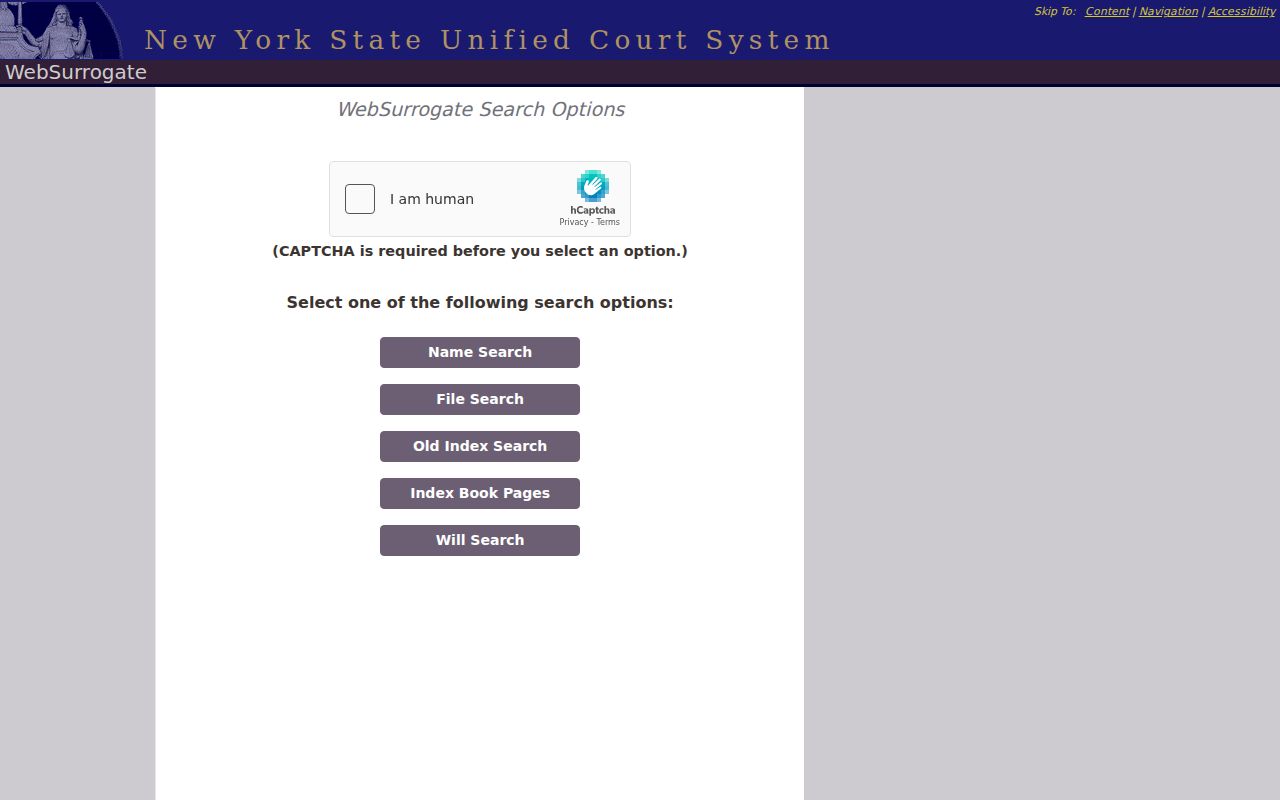
The portal points you toward probate authority. The deed records the land transfer.
Business and Trust Names in Owner Research
An LLC, corporation, trust, or other entity may stand in as owner of record. It replaces a person as the named owner. Search the assessment spelling exactly. Then test shortened forms and punctuation variants in the Clerk index. New York's Department of State entity search shows status and filing history. Entity status alone does not tie a business to a parcel. The deed and the roll make that connection.
Trust names can differ between the deed and the assessment roll. Record trustees and representative capacities exactly as printed. Never rewrite a trust or estate owner as an individual. Do so only with language in the document supporting it.
Older Tompkins County Owner Records
County land records are described from 1817 forward. Staff name searches reach back to 1968 at $5 per name, and earlier staff work costs $5 per name for each two-year period. Older owner research may still require deed books, reverse indexes, microfilm, and a focused office request.
Other sources add context. Tompkins County Public Library directories run from 1864 through 1985 with gaps, and History Center maps or family files can link a person to an address at a point in time. Directory evidence is not title evidence. Use it as background and return to the deed chain.
Resolve Conflicts About Who Owns the Property
Compare effective dates first. A newly recorded deed can post after the assessment snapshot. Then compare legal descriptions and Printkeys so both records concern the same land. Check whether a parcel split or merger changed the identifier. When the chain includes a court or fiduciary transfer, search judgments, estate files, foreclosure records, and later deeds.
Supreme and County Court files may cover foreclosure, quiet title, partition, or easement disputes. An eCourts result is only a docket lead. Sealed, restricted, or unentered matters may be missing. Get the actual file or final recorded instrument before stating an outcome.
Lawful Limits on a Tompkins County Owner Search
Public availability does not equal proof of residence, identity, or family connection. It grants no permission to contact anyone. Some protections exist for safety reasons. The Address Confidentiality Program and confidential voter registration both shield certain people. They keep those people from being traced through public files. Voter rolls, corrections records, registries, licenses, directories, and court searches are separate systems. None of them should stand in for land records.
Ownership research only. Verify with the custodian, respect protected addresses, and never use a property owner search to stalk, target, or harass anyone.
Document the Ownership Conclusion
Write the ownership conclusion down. A good note lists the address, the municipality, the Printkey, and the roll year. It quotes the CURRENT OWNERS NAME field exactly as the assessor recorded it. Then it carries the newest deed details: grantee, recording date, and instrument number. Note whether the deed image itself was read. Note whether its legal description matched the assessment parcel. When sources conflict, report both readings instead of silently picking one. Record the access date so another researcher can repeat the steps. That way they can see the conclusion rests on recorded and assessment evidence rather than on anyone's actual residence.
One name can attach to several parcels in Tompkins County. In that case, write a separate note for each Printkey rather than merging them on spelling alone. Entity names, shared surnames, and adjoining family parcels make parcel-by-parcel conclusions essential.